
The Spectrum of Shared Control
Authority is not held or surrendered. It is distributed along a continuum that moves in real time — and the operator's task is to keep that movement deliberate.

The Human-AI Partnership Model
HAPM formalises task allocation within shared autonomy spaces by treating human operators and autonomous agents as interdependent team members.
Shared Assistance
- Human
- Continuous trajectory guidance, target selection.
- Machine
- Kinematic smoothing, obstacle avoidance, force feedback.
- Shifts here when
- High-precision tasks, sensory-motor latency mitigation.
Drag the operating point to see how the partnership is composed at that position
A continuum, not a set of gears
Rather than enforcing fixed, rule-based divisions of labour, HAPM governs control distribution along a dynamic spectrum. The named modes below are useful labels for regions of that spectrum, not discrete states the system snaps between. In practice, the operating point drifts continuously.
What moves the operating point
The position fluctuates fluidly, in real time, on four inputs:
- Task complexity — how much precision and context the current sub-task demands
- Algorithmic confidence — how strongly the agent's own estimates support acting alone
- Human cognitive load — how much attention the operator has left to spend
- Environmental uncertainty — how far conditions have drifted from the agent's model
Preserving the sense of agency
A central challenge in HAPM implementation is preserving the operator's psychological sense of agency — the felt experience of authoring an outcome.
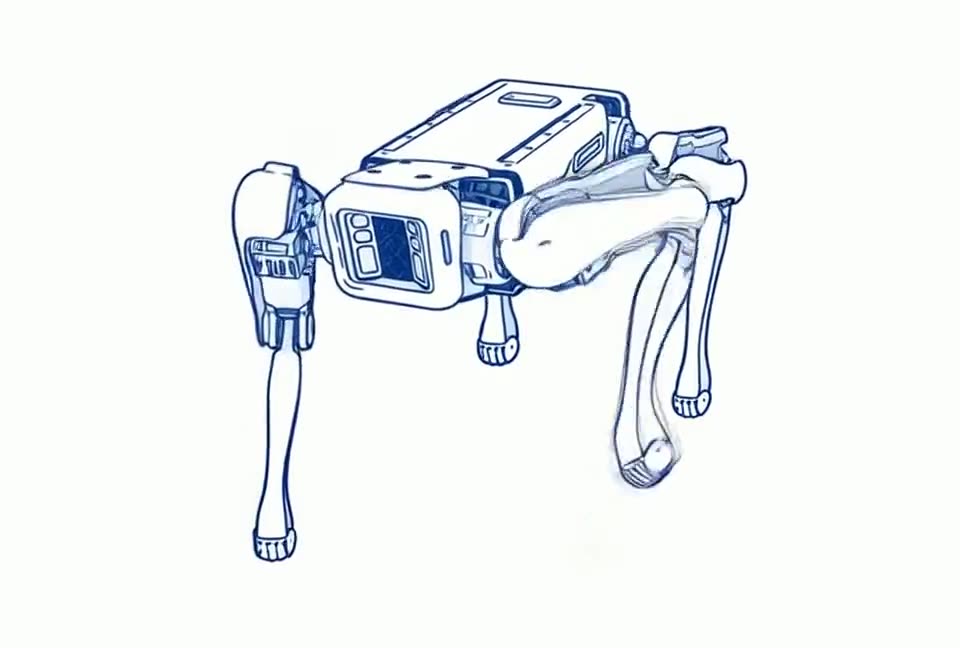
Agency dilution
When an assistive layer silently corrects, smooths or re-plans the operator's input, the operator's contribution becomes impossible to identify in the result. The action succeeds, but authorship is lost. Over time this erodes skill, engagement and the willingness to intervene at the moment intervention matters.
Agency alienation
Taken further, the system's actions conflict directly with human intent and the operator stops experiencing themselves as an actor at all. Alienated operators monitor poorly and respond slowest precisely when a handover finally arrives.
How authority is blended
Arbitration is not a switch between two command streams. It is a weighted combination of them, with the weight itself estimated in real time.
Applying the spectrum to forensic recovery
A wildlife crime scene is a decaying dataset. Manual control is too slow to beat degradation; full autonomy cannot make judgements that hold up in court.
Detect, reach, preserve
Each recovery has three phases: detect the trace with an appropriate sensing modality, reach it on a route that does not contaminate the scene, and preserve integrity through to the evidence locker. A perfect detection followed by a careless approach is a lost case.